Spring Semester Student Work Highlights
Here is a varied set of projects from the spring LWHS Device Invention (10-12 grade) and Design and Technology (9th grade) classes that, as I sorted through the semester’s documentation, caught my eye as extraordinarily innovative or generally well done.

This is a fly incubator, created for our genetics instructor, by a group of four 9th grade students. With custom-made incubation tube caddies, this container keeps the fly larvae (also known as maggots : 0) in an adjustable, temperature-regulated environment. This was created by Alex, Indigo, Max and Kaira.

This is an IOT project that uses RFID (radio frequency identification) to detect whether chickens have returned to the coup at night. The creator, Hannah (10th grade), noted that if the chickens do not make it back into the coup, they run the risk of being eaten at night. This system posts their status to a webpage and sends you a text at the end of the day letting you know which chickens “might be eaten”.

Another project by Hannah and her collaborator Emily visualizes the coup conditions for some neighborhood chickens. The two students built their own data collection system to record environmental data about the chicken coups, including temperature, volume and light level. They then used P5.js to visualize the data over a 24-hour period (above)
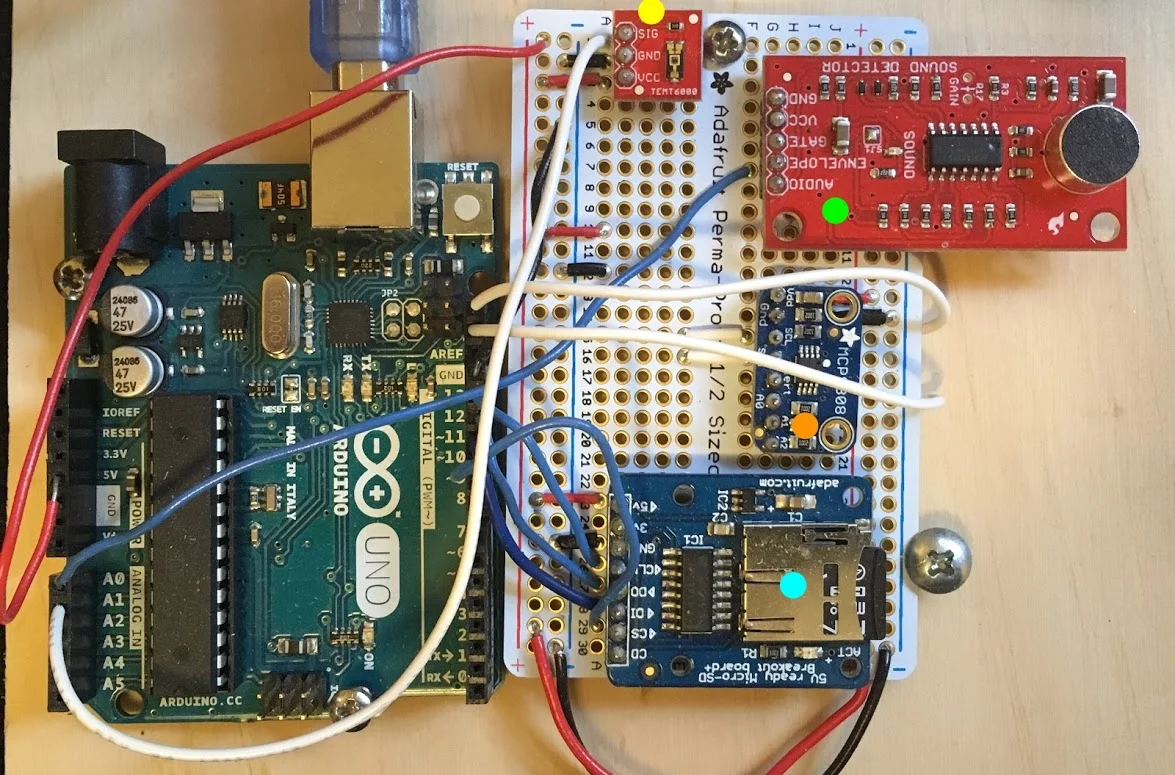
This is the Arduino-based data collection system for the chicken coups.

Using live data, this display by Naomi (11th grade) adjusts LEDs to match the sunrise and sunset of four different cities in the US.
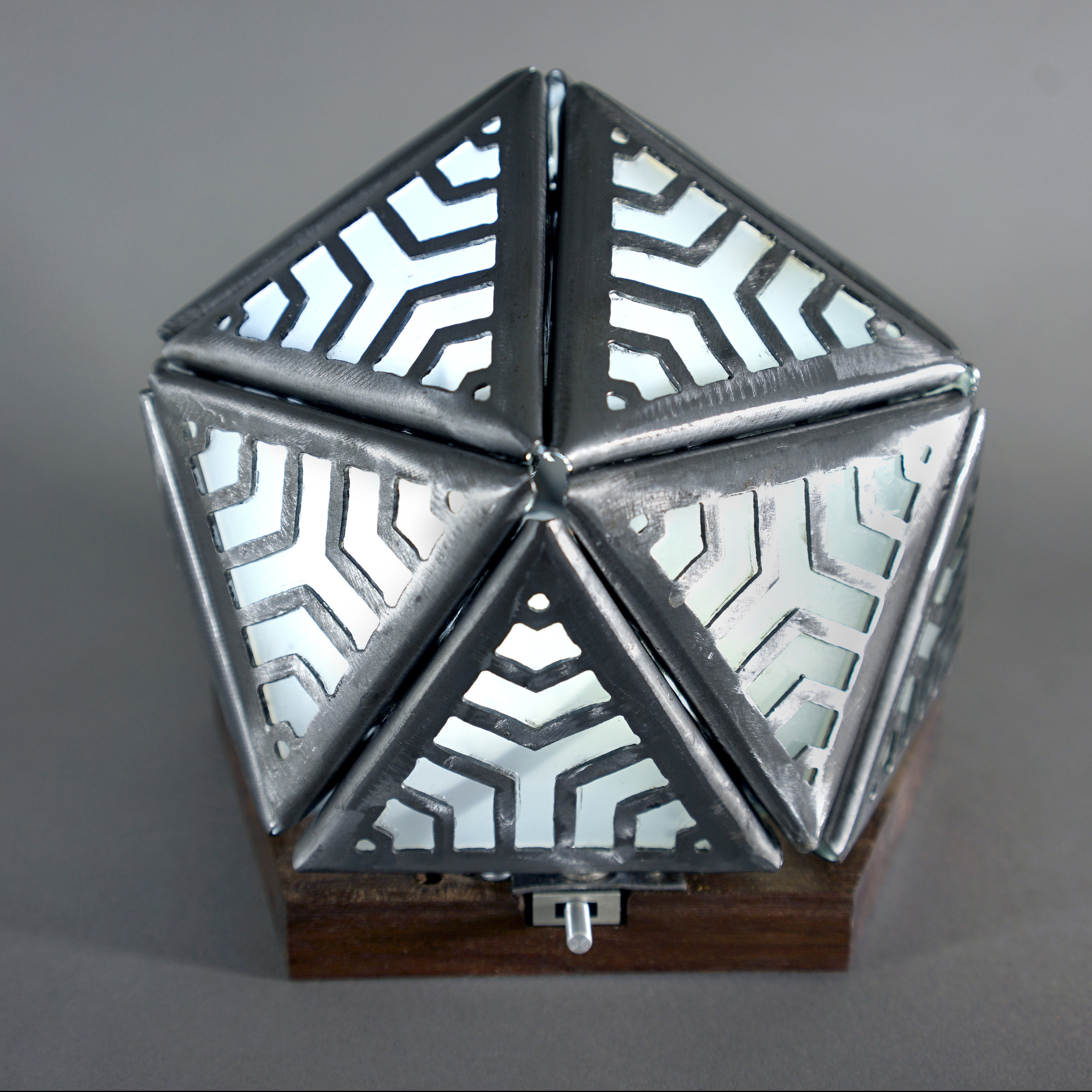
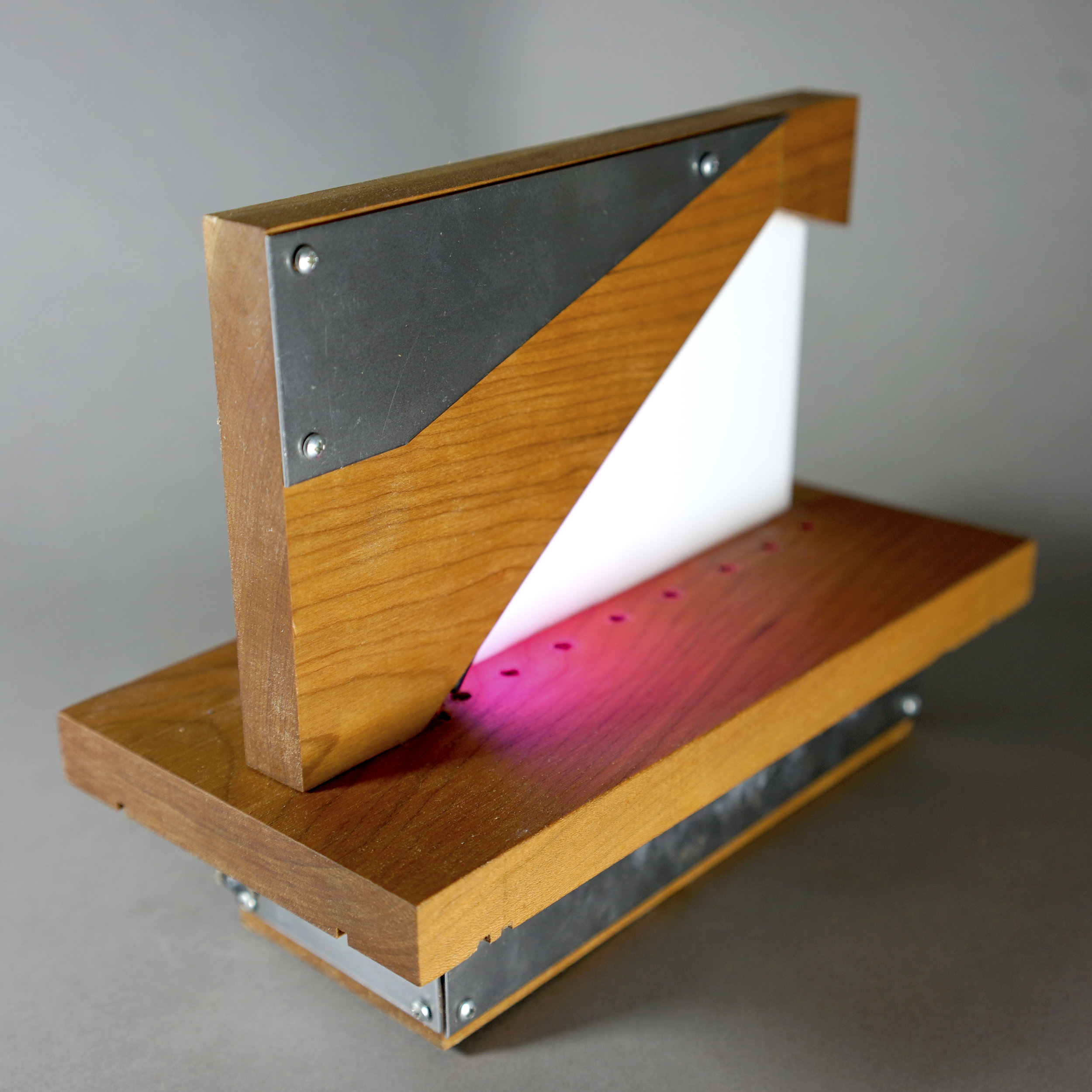
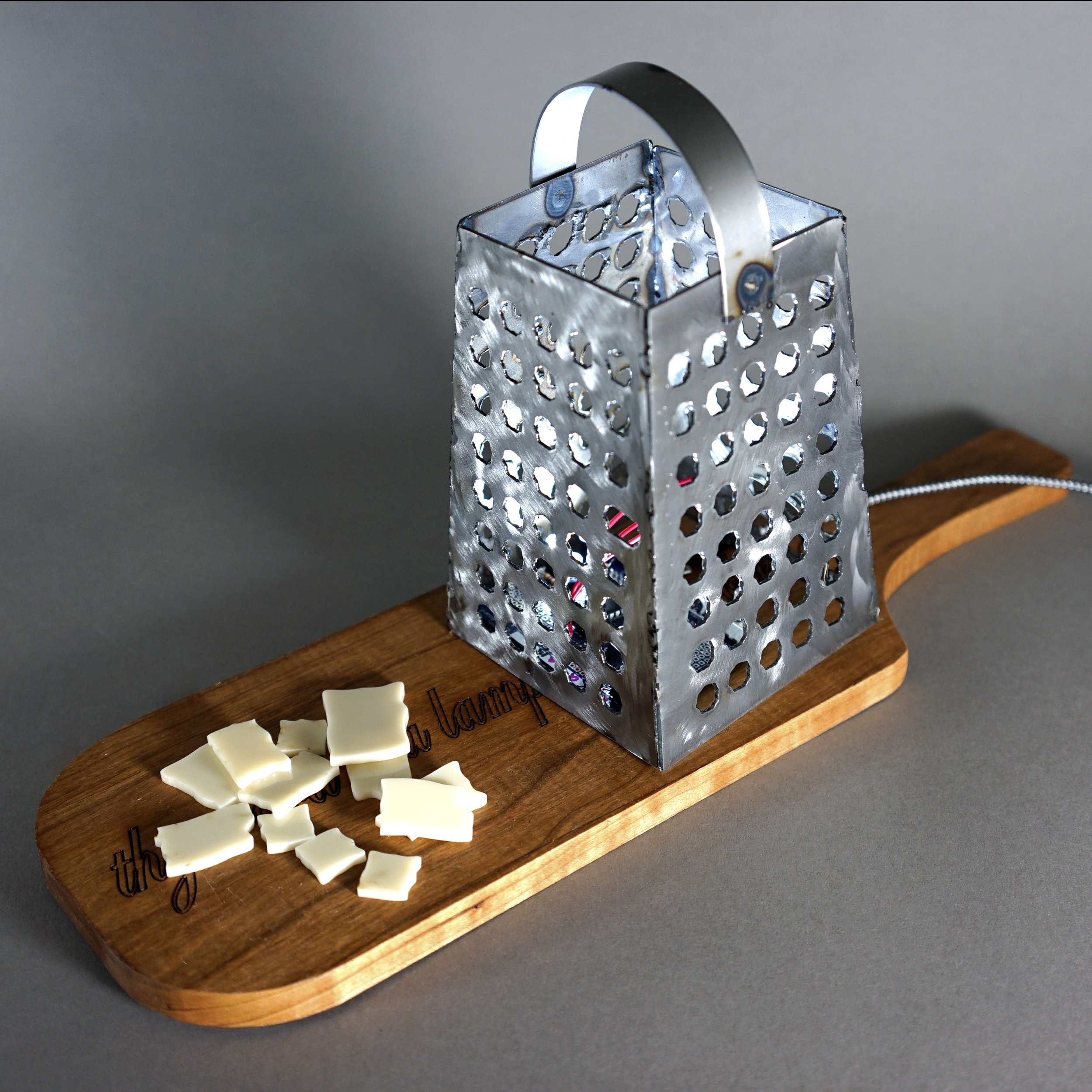
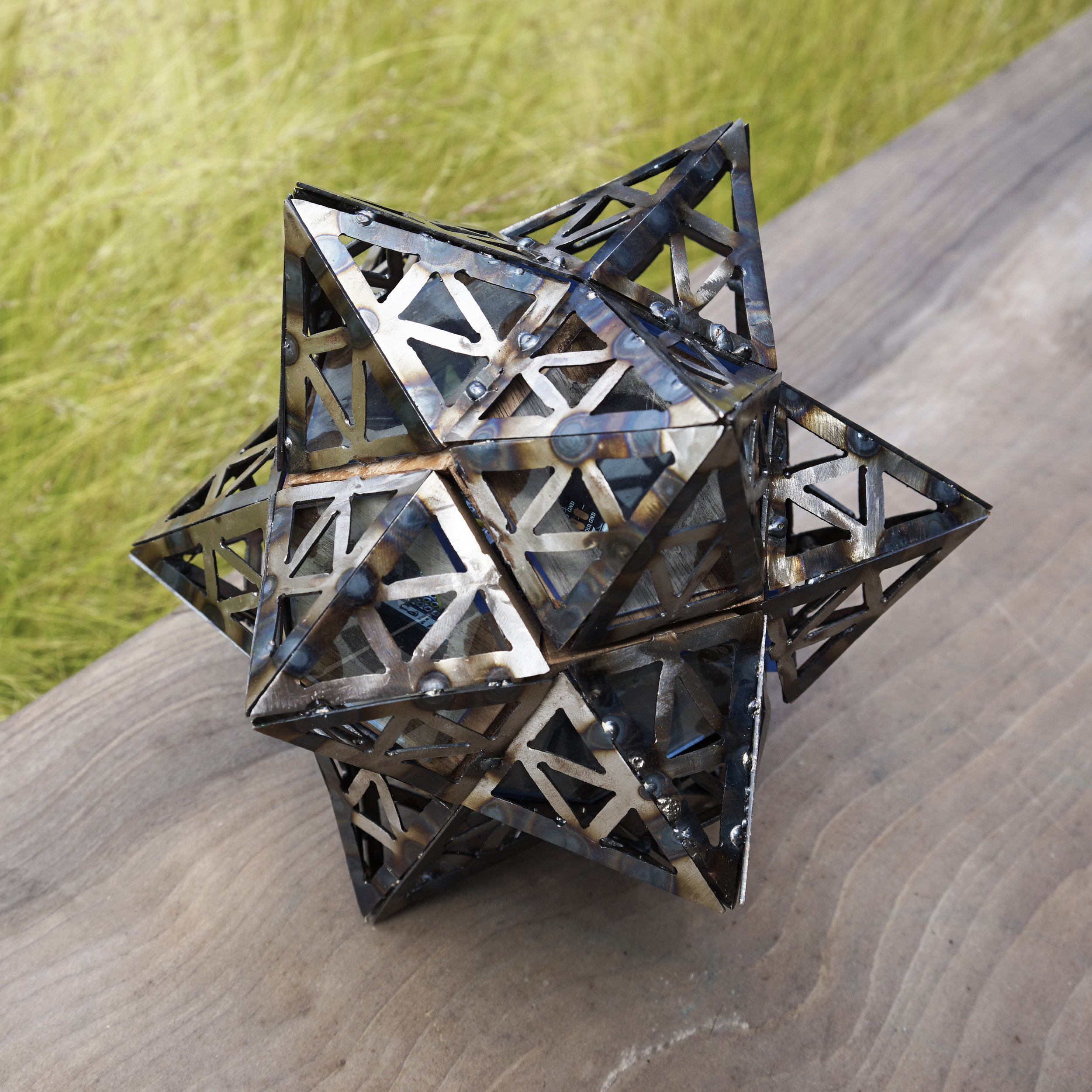

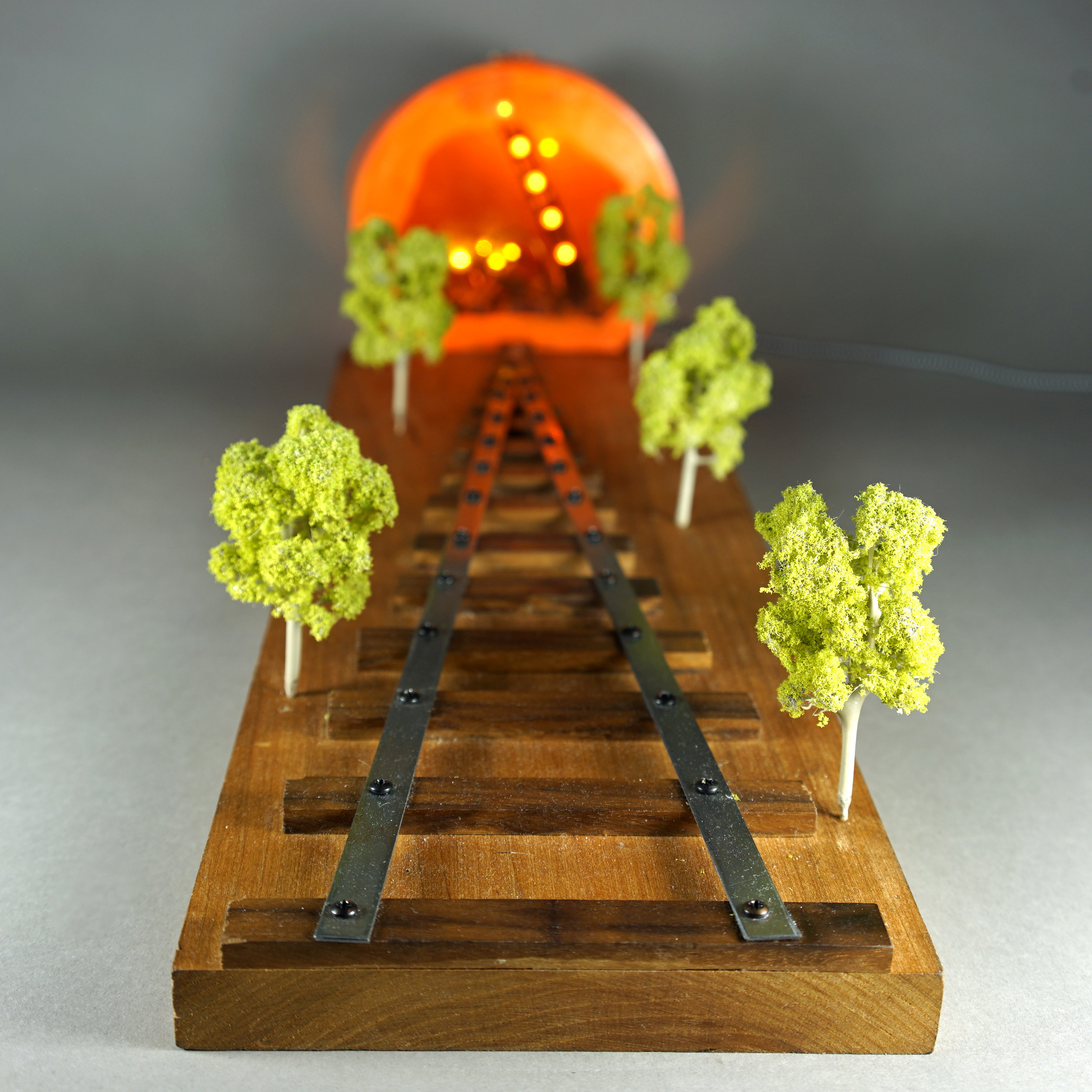
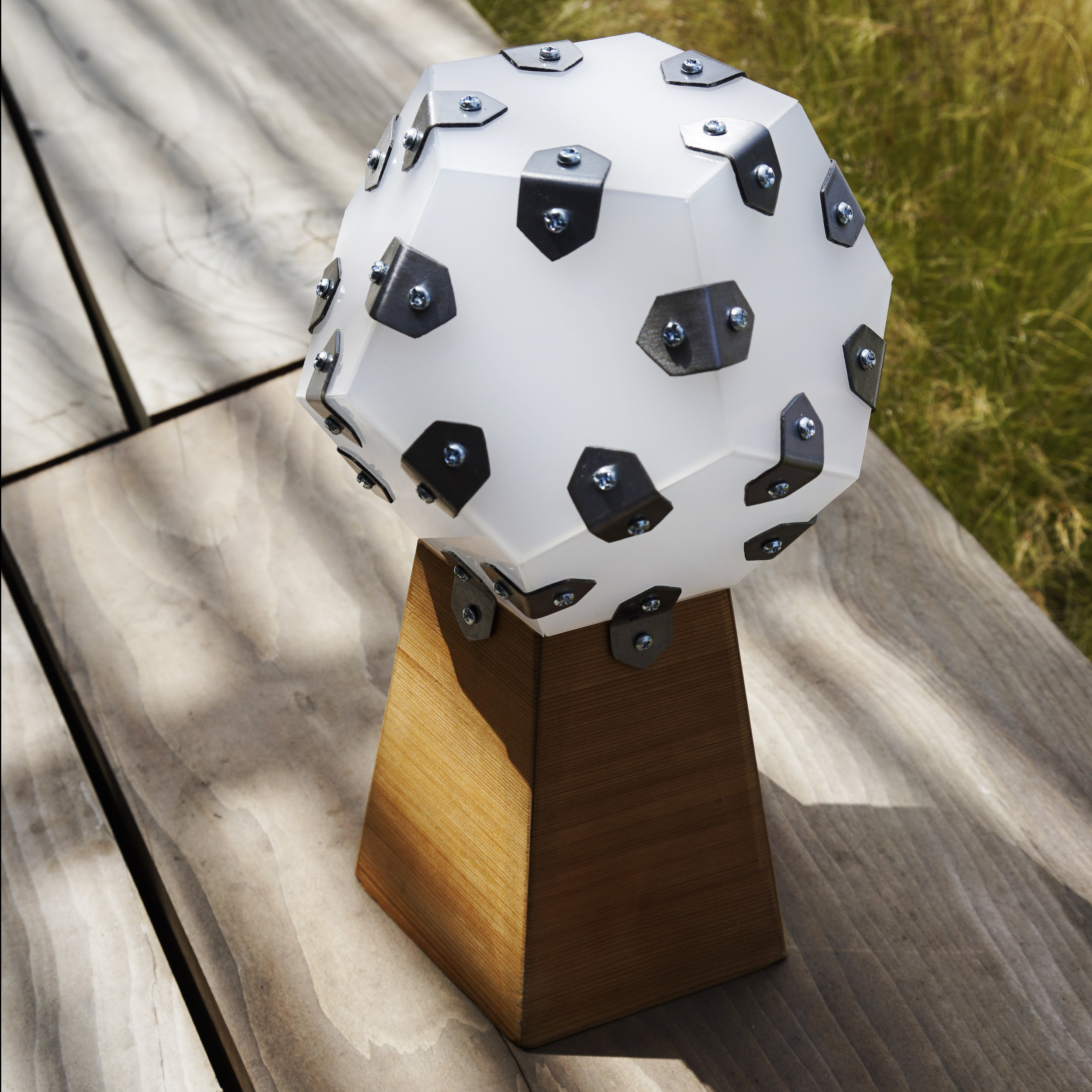
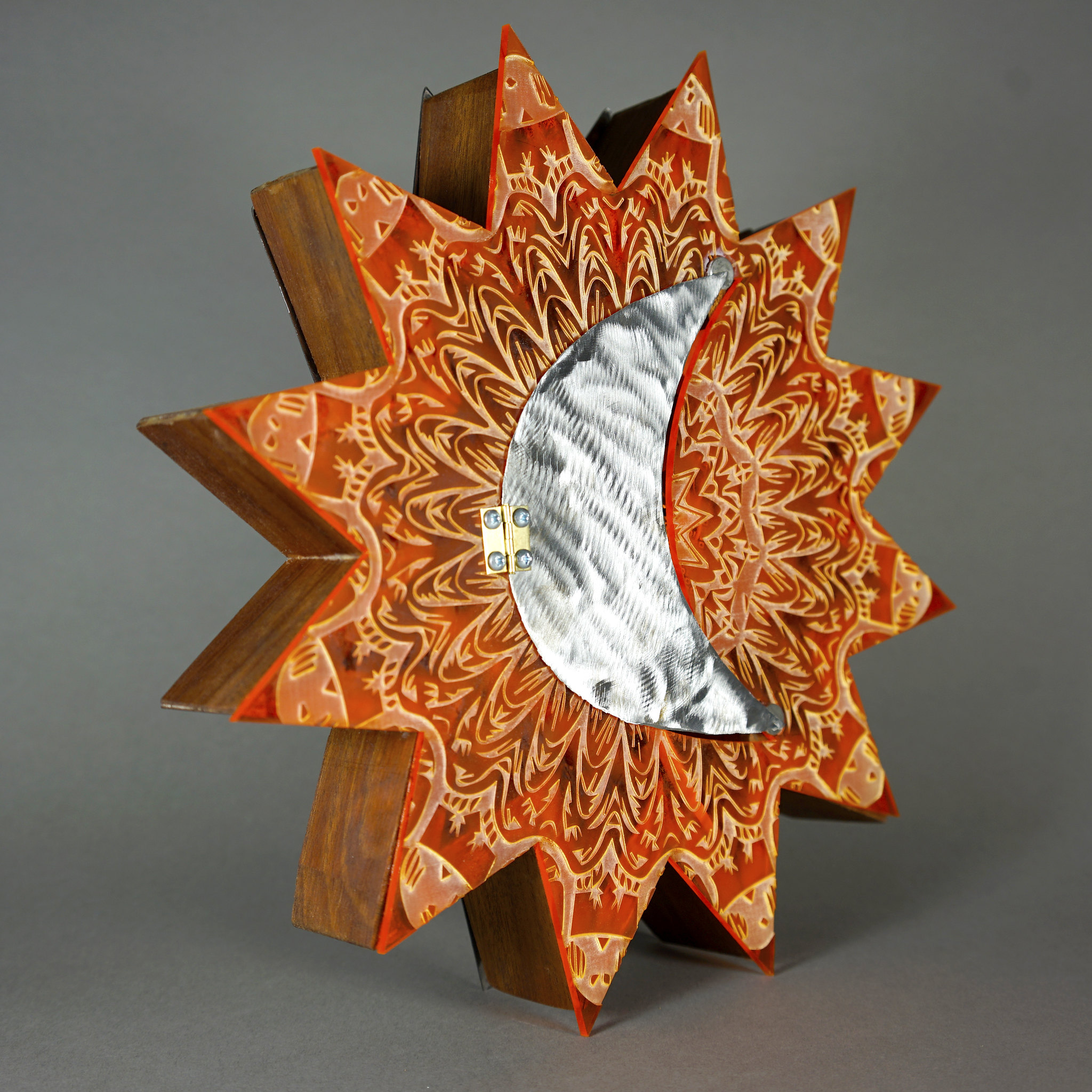
Above are a few of the 140+ lamps we built with the 9th-grade students in the team-taught Design and Technology course. Most students start the year with little to no experience in Design and Fabrication and are required to use wood, metal, acrylic and a programmed circuit in the making of the lamp.

Here is a pair of display-based IOT projects. The one above uses an API to display local movies and average audience review scores. The one below gives bus times and utilizes a funny ASCII representation of a Muni bus.

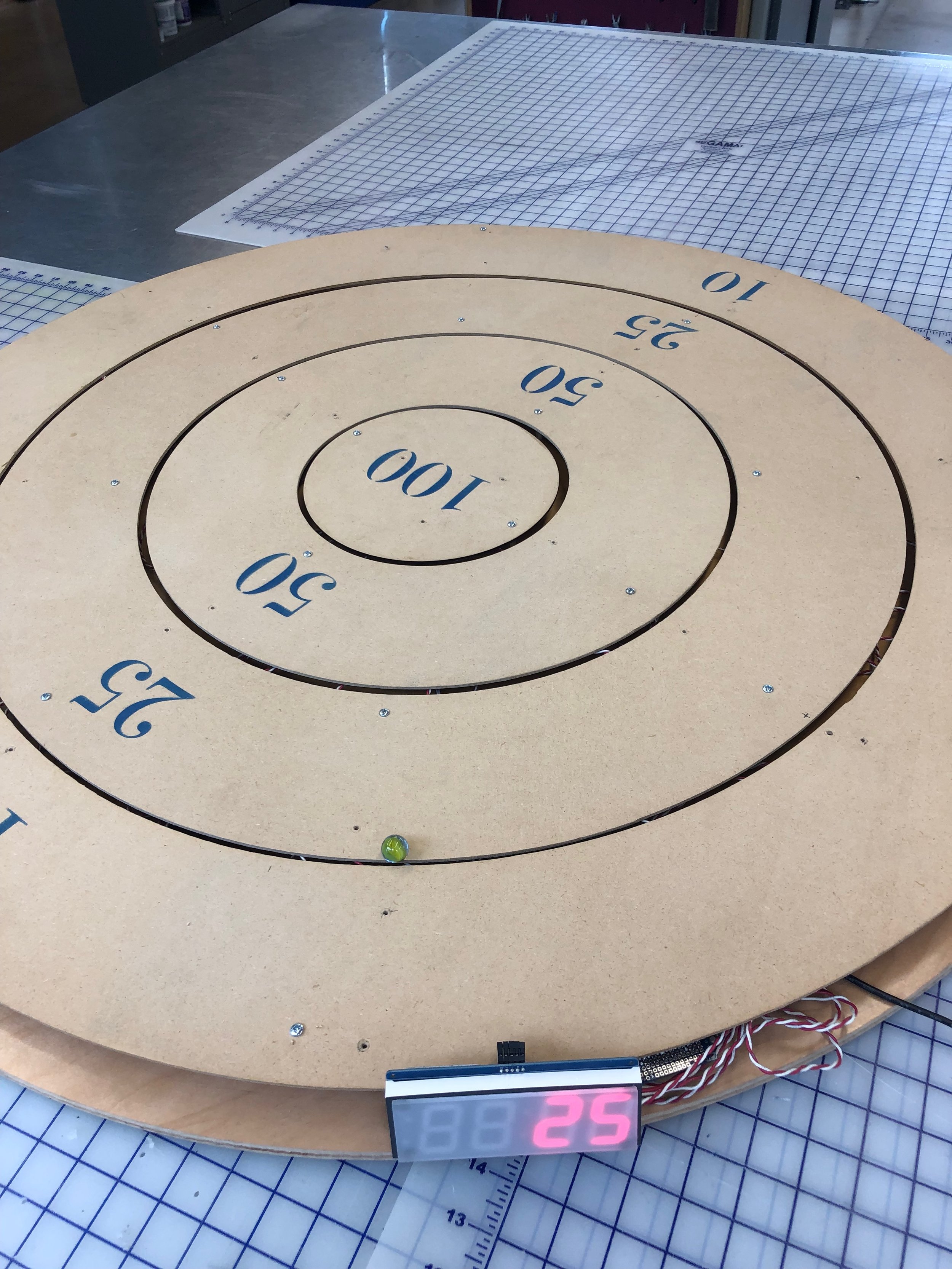
Finally, this 4ft-diameter target for the school’s physics department, created by a group of four 9th grade students (Marco, Lea, Adam and Mirabelle), is to be used for projectile experiments. When a marble is launched and hits the target, vibration sensors let you know which of the rings the marble lands on. Your score is displayed for five seconds on a digit display. It works amazingly well!
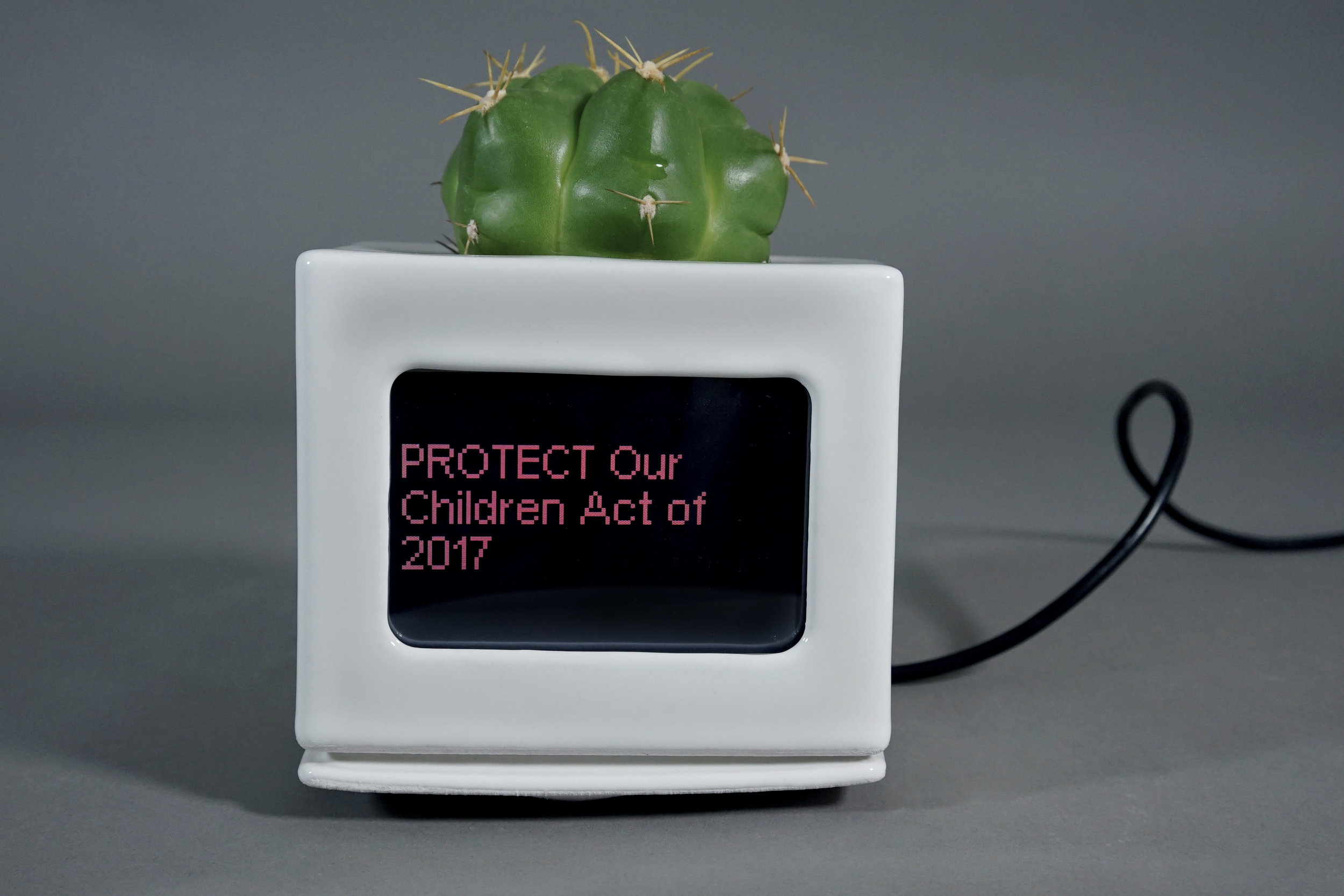
New Piece: Prickly

Prickly is an internet-connected decorative planter that uses the ProPublica Congress API to cycle through a live list of the latest 10 bills passed by the United States Senate (on one LCD screen) and latest 10 bills passed by The House of Representatives (on the other). Find out what your elected officials are finagling through congress every time your water a parched cactus.
A variety of interests came together in the creation of this project. Like many people, I'm following politics pretty closely right now but I realized that there are many decisions happening behind the scenes or at least out of the regular news cycle. Maybe these proposed laws aren't dramatic enough or are just too technical to make the news, but some will certainly have a significant impact on the future of the United States. With this use of the ProPublica Congress API I began considering ways to integrate that information into my daily home experience.
Initially unrelated, I had been looking for an application of ceramic or porcelain 3D printing. I kept coming back to cups, flatware or planters. Then the idea struck: An Internet of Things planter! What better partner to accompany the current state of congressional politics than a cactus?
The exterior porcelain enclosure and the interior PLA structure are both modeled using Rhino. I test printed the exterior enclosure on a Makerbot before using Shapeways for the final print. The interior structure, which holds the small monitors and the IOT Photon controllers in place, is a basic PLA print created on a Makerbot. The cactus is from one of my favorite plant shops in San Francisco: Flora Grubb.
Materials: 3D Printed Porcelain and PLA, Photon IOT controllers, LCDs, Cactus
Dimensions: 4.5"w x 4.5"h x 4.5"d (not including plant)




New Piece: Welcome Drone
I had the idea for this object two years ago when I first learned about the dronestre.am website by artist Josh Begley. I've iterated on various versions but this is the one that feels complete. Welcome Drone uses the internet of things methodology to bring the reality of secret drone strikes into the home and into casual conversation. Once an hour, a photon microcontroller checks to see if there are updates on the dronestre.am site. If there are, the unit glows for 8 hours continuously. Because there's nothing about the piece which indicates its meaning, it blends into the home like any other wall hanging artwork or decor. When it does unexpectedly light up it may serve as a reminder or conversation starter about the secret strikes that are taking place on a regular basis in Pakistan, Yemen and Somalia.